Industry News
Vertical Conveyors: Empowering Efficient Operations in Smart Warehousing
Within modern smart logistics and warehousing systems, vertical conveyors serve as the core hub for vertical goods transfer; they are the key enablers for establishing multi-level warehousing and achieving end-to-end automated operations. As vital ancillary equipment for automated multi-level warehouses, hoists effectively overcome the operational limitations of traditional horizontal warehousing. They provide core support for unmanned, efficient and intensive warehouse operations, and are indispensable foundational equipment for the upgrade of smart warehousing.
The core value of hoists lies in utilising vertical space to enhance warehouse utilisation. Traditional warehousing relies primarily on horizontal stacking, resulting in a severe waste of floor-to-ceiling height resources and limiting storage capacity expansion. Intelligent hoists enable the automatic transfer of goods across floors and between high and low levels, adapting to high-rack, multi-level storage models. They fully exploit the vertical space within warehouses, significantly increasing overall storage capacity. This effectively addresses the industry-wide challenges of insufficient warehouse space and spatial wastage, facilitating the intensive utilisation of storage resources.
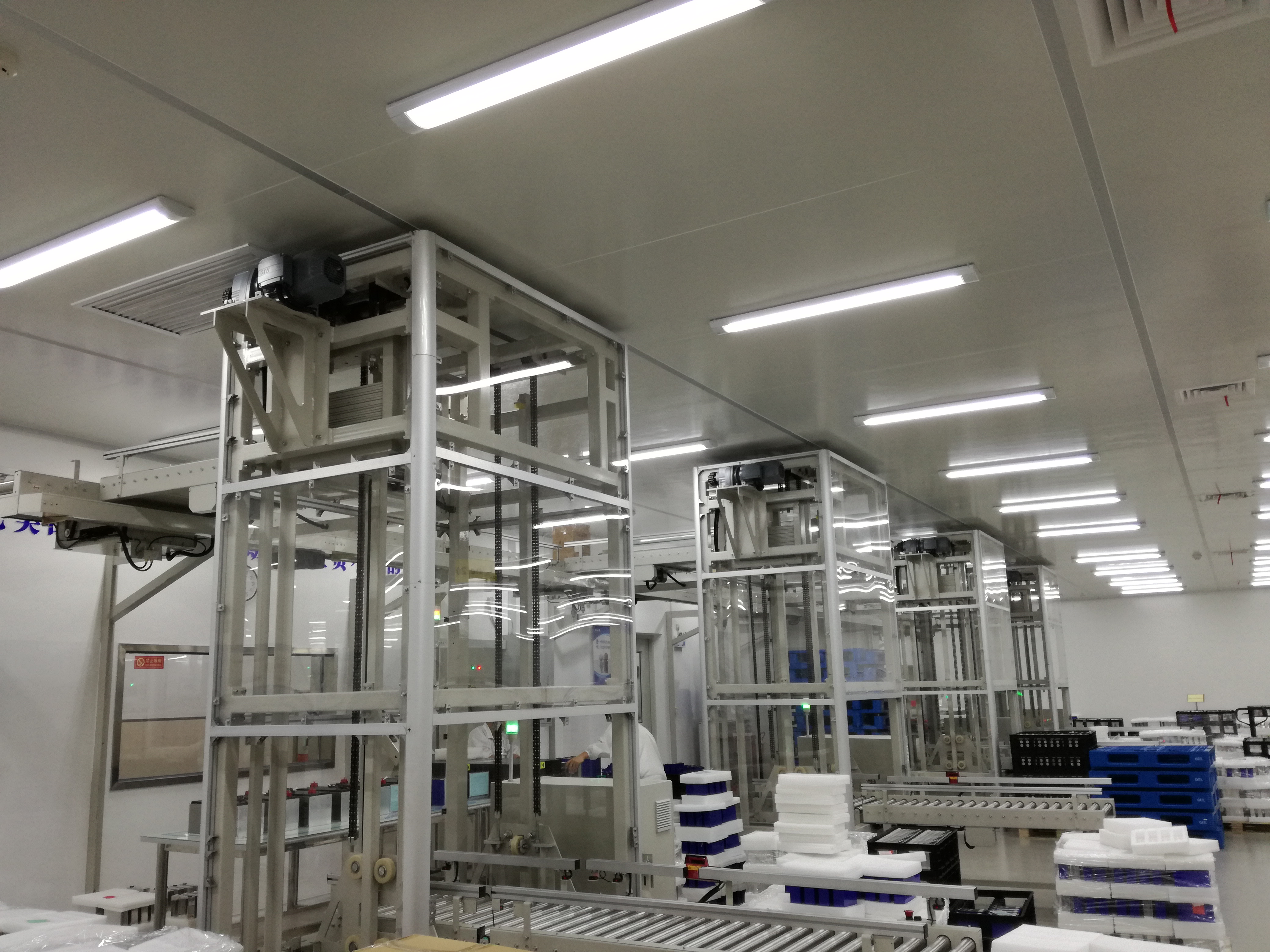
Furthermore, hoists serve as the central link in automated warehouse logistics. The equipment integrates seamlessly with automated systems such as stacker cranes, AGVs and intelligent sorting lines, linking the entire process from goods receipt, storage and sorting to dispatch, and enabling fully unmanned vertical goods conveyance. This completely replaces traditional, labour-intensive methods such as manual climbing and forklift handling, eliminating safety hazards associated with manual operations whilst reducing goods damage and order errors caused by human error, thereby significantly lowering labour costs in warehousing.
Furthermore, the intelligent hoist can integrate with WMS and WCS warehouse management systems to enable precise digital scheduling. The system can adaptively adjust operating frequency and speed based on order waves and inventory status, accommodating both routine operations and peak promotional periods. This effectively shortens goods turnover cycles and enhances the efficiency of inbound and outbound operations. The equipment supports stable, continuous 24-hour operation and features built-in fault self-diagnosis, ensuring the efficient, smooth and uninterrupted operation of the intelligent warehousing system, thereby enhancing overall operational resilience.
In summary, the hoist not only addresses the shortcomings of traditional warehousing—such as insufficient space and low efficiency—but also completes the closed-loop automation of the entire smart warehousing chain. It plays a pivotal role in expanding capacity, enhancing efficiency, reducing costs, improving quality and enabling intelligent operations, serving as a crucial cornerstone for driving the transformation of traditional warehousing into digital, intelligent and intensive smart logistics.