With the rapid advancement of technology and continuous social progress, conveying and handling equipment continues to innovate and upgrade, exhibiting distinct development trends such as intelligent and green features, bringing boundless possibilities for future industrial growth.
Intelligent development represents a key direction for conveying and handling equipment. Driven by continuous advancements in technologies like artificial intelligence, the Internet of Things, and big data, such equipment will gain enhanced capabilities for intelligent decision-making and adaptive operation. Future intelligent conveying systems will sense material type, weight, and location in real time, automatically adjusting speed, direction, and path for efficient, precise handling. AGV and AMR robots will expand into more scenarios, using laser navigation and visual guidance for autonomous movement and obstacle avoidance. They will seamlessly integrate with other equipment and systems to execute complex transport tasks. In logistics warehousing, intelligent warehouse management systems can automatically dispatch AGVs for goods handling and storage based on factors like inventory turnover frequency and storage locations, enhancing warehouse space utilization and operational efficiency. In industrial production, smart conveying and handling equipment can seamlessly integrate with production lines, automatically distributing materials according to production demands to improve manufacturing coordination and efficiency.
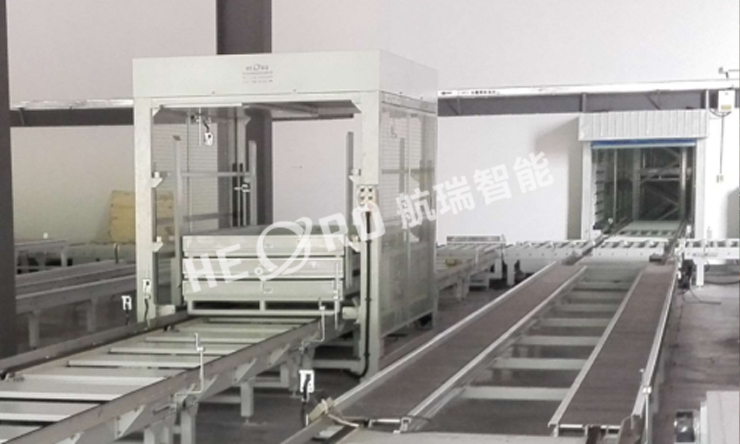
Green technology represents an inevitable trend in the development of conveying and handling equipment. Amidst global advocacy for environmental protection and sustainable development, energy consumption and emissions from conveying and handling equipment are receiving increasing attention. In the future, green energy will see broader application in such equipment. Devices like electric forklifts and solar-powered conveyors will gradually replace traditional fuel-powered equipment, reducing energy consumption and exhaust emissions. During equipment design and manufacturing, greater emphasis will be placed on using eco-friendly materials and applying energy-saving technologies. Optimizing equipment structure and transmission methods will further lower operational energy consumption. Some enterprises have already begun developing and utilizing biodegradable materials for conveyor components, minimizing environmental pollution after equipment disposal. Simultaneously, technologies like energy-efficient motors and intelligent control systems effectively reduce energy consumption, enabling green and sustainable development.
Beyond intelligence and environmental sustainability, conveying and handling equipment will also evolve toward higher efficiency, multifunctionality, and customization. In the future, equipment conveying speeds and handling capacities will continuously increase to meet growing production and logistics demands. Through innovative design and technological enhancements, conveying and handling equipment will gain additional functions such as material sorting, packaging, and metering, enabling one-stop material processing. Customized conveying and handling equipment tailored to the specific needs of different industries and clients will also become increasingly prevalent, providing customers with more precise and efficient solutions.
As a vital pillar of modern industry, conveying and handling equipment plays an indispensable role across all sectors. With continuous technological advancement and evolving market demands, this equipment will encounter broader development opportunities. In the future, intelligent and eco-friendly conveying and handling systems will become the industry standard, making greater contributions to industrial upgrading, production efficiency enhancement, and sustainable development.