Industry News
Intelligent Automated Storage Systems Empower Multi-Industry Warehousing, Ushering in the Era of Smart Logistics Storage.
In the automotive manufacturing sector, the vast variety and complex specifications of components pose significant challenges for traditional warehousing models. Issues such as low space utilization, inefficient sorting, and errors in dispatching or omissions severely disrupt production schedules. A major automotive parts manufacturer addressed this situation by implementing an intelligent automated storage system. This system maximizes vertical space through high-bay shelving, increasing storage capacity by over three times compared to traditional flat warehouses, effectively resolving the company's land constraints within its factory premises. Additionally, equipment like stacker cranes and intelligent sorting robots enables automated parts intake/outtake, precise sorting, and smart transfer. This not only ensures timely and accurate parts supply but also reduces labor costs, providing robust support for rapid production operations.
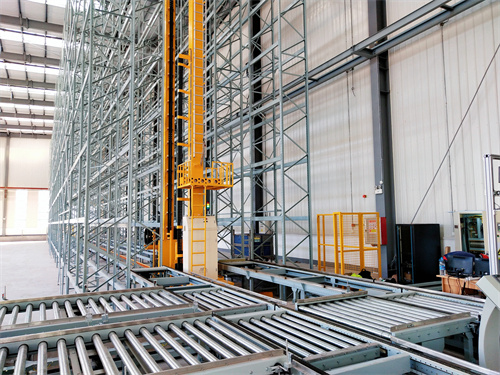
In the food cold chain sector, intelligent automated warehouses have resolved numerous pain points in low-temperature storage management. Food cold chains demand stringent temperature control and shelf-life management. Traditional warehousing relies on manual operations, which are inefficient and prone to human error leading to spoilage. A cold chain logistics company implemented an intelligent automated warehouse with precise temperature and humidity control systems. These systems enable real-time monitoring and accurate adjustment of storage temperatures, maintaining fluctuations within ±0.5°C to ensure food freshness and safety. Simultaneously, the automated operations of smart warehouses eliminate prolonged manual labor in low-temperature environments, reducing labor costs and safety risks. Furthermore, through WMS systems, they enable full traceability of food products from intake to dispatch, ensuring end-to-end traceability throughout the cold chain.