As Industry 4.0 continues to deepen and the intelligent transformation of manufacturing accelerates, the operation of smart factories relies heavily on core logistics equipment. Among these, conveying and handling equipment—serving as the “logistics arteries” that connect all stages of production—is gradually breaking free from the limitations of traditional machinery. It is evolving toward intelligent and flexible systems, becoming a key driver in helping smart factories reduce costs, improve efficiency, and achieve end-to-end digital control.
Compared to traditional equipment, conveying and material handling systems in smart factories have achieved breakthroughs in both technology and functionality. Leveraging technologies such as the Internet of Things (IoT), PLC-based intelligent control, and sensor detection, these systems enable automatic material identification, precise conveying, intelligent scheduling, and real-time monitoring, thereby overcoming the efficiency bottlenecks and safety hazards associated with manual handling. Whether it involves material transfer in electronics assembly workshops, heavy-duty material handling in automotive parts factories, or sterile conveying in the food and pharmaceutical industries, conveying and handling equipment can provide customized solutions tailored to the production rhythms and specific requirements of smart factories.
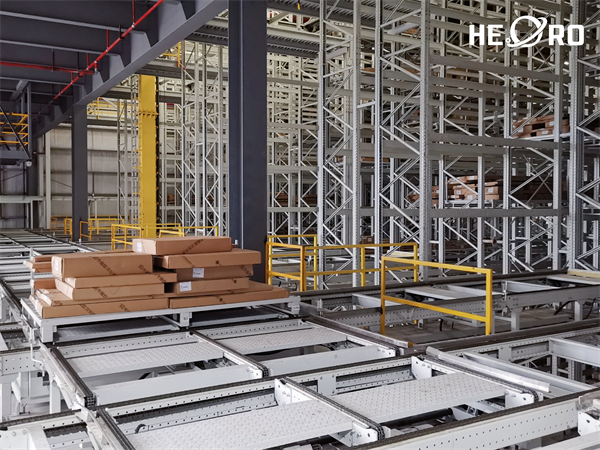
Currently, an increasing number of enterprises are prioritizing the upgrade of conveying and handling equipment as a key strategic focus in their smart factory initiatives. By deploying modular, intelligent conveying and handling equipment, enterprises can achieve fully automated material flow throughout the entire process—from warehousing, production, and processing to outbound shipping—significantly improving handling efficiency while reducing labor costs and material waste. For example, after introducing flexible conveying and handling equipment, a certain smart factory saw a more than 30% increase in handling efficiency and a 40% reduction in unplanned downtime, effectively ensuring production continuity.
With the advancement of the “dual carbon” goals and continuous technological innovation, conveying and handling equipment in smart factories is evolving toward greater energy efficiency and precise adaptability. The application of energy-efficient motors and variable-frequency control technology has significantly reduced the energy consumption of such equipment; modular design allows for flexible adaptation to production models involving multiple product varieties and small batches, enabling layout adjustments without the need for comprehensive system overhauls. These upgrades not only align with the development needs of smart factories but also help enterprises achieve low-carbon production.
In the future, as technologies such as AI and digital twins become more deeply integrated with conveying and handling equipment, their applications in smart factories will become even more widespread. As a core component of the smart factory logistics system, conveying and handling equipment will continue to empower the intelligent transformation of the manufacturing sector, helping enterprises enhance their core competitiveness and driving high-quality development in the manufacturing industry.