Industry News
Three-dimensional warehouses have become a new choice for enterprises to improve space utilization
The automated warehouse extends storage space from a horizontal to a vertical direction by constructing multi-tier shelving structures, significantly increasing storage capacity per unit area. For the same footprint, it can hold more goods, effectively alleviating corporate storage space shortages. Additionally, the high-rack design maximizes building height utilization, reduces land occupation, and enhances overall warehouse efficiency.

In addition to spatial advantages, the application of automated equipment also enables automated warehouses to operate more efficiently. Through intelligent logistics devices such as stackers, conveying systems, shuttles, and AGVs, goods can be automatically stored, retrieved, transported, and retrieved, reducing manual operations and improving speed and accuracy. Compared to traditional warehouses, automated warehouses can operate around the clock, meeting enterprises' large-volume, high-frequency logistics demands.
Digital management is also a crucial direction for the development of automated warehouses. By integrating the WMS (Warehouse Management System) and WCS (Warehouse Control System), enterprises can monitor inventory status, equipment operation, and logistics tasks in real time, achieving transparent management of the warehousing process. Additionally, through data analysis and intelligent scheduling, the system can optimize storage location allocation, enhance inventory turnover efficiency, and reduce warehousing management costs.
With the continuous changes in market demand, automated warehouses are also evolving toward flexibility and intelligence. In the future, enterprises will be able to flexibly adjust their storage strategies based on production and logistics needs, enabling coordinated operation of equipment, systems, and business processes. Meanwhile, the integration of technologies such as artificial intelligence, the Internet of Things, and digital twins will further enhance the intelligent decision-making capabilities of automated warehouses.
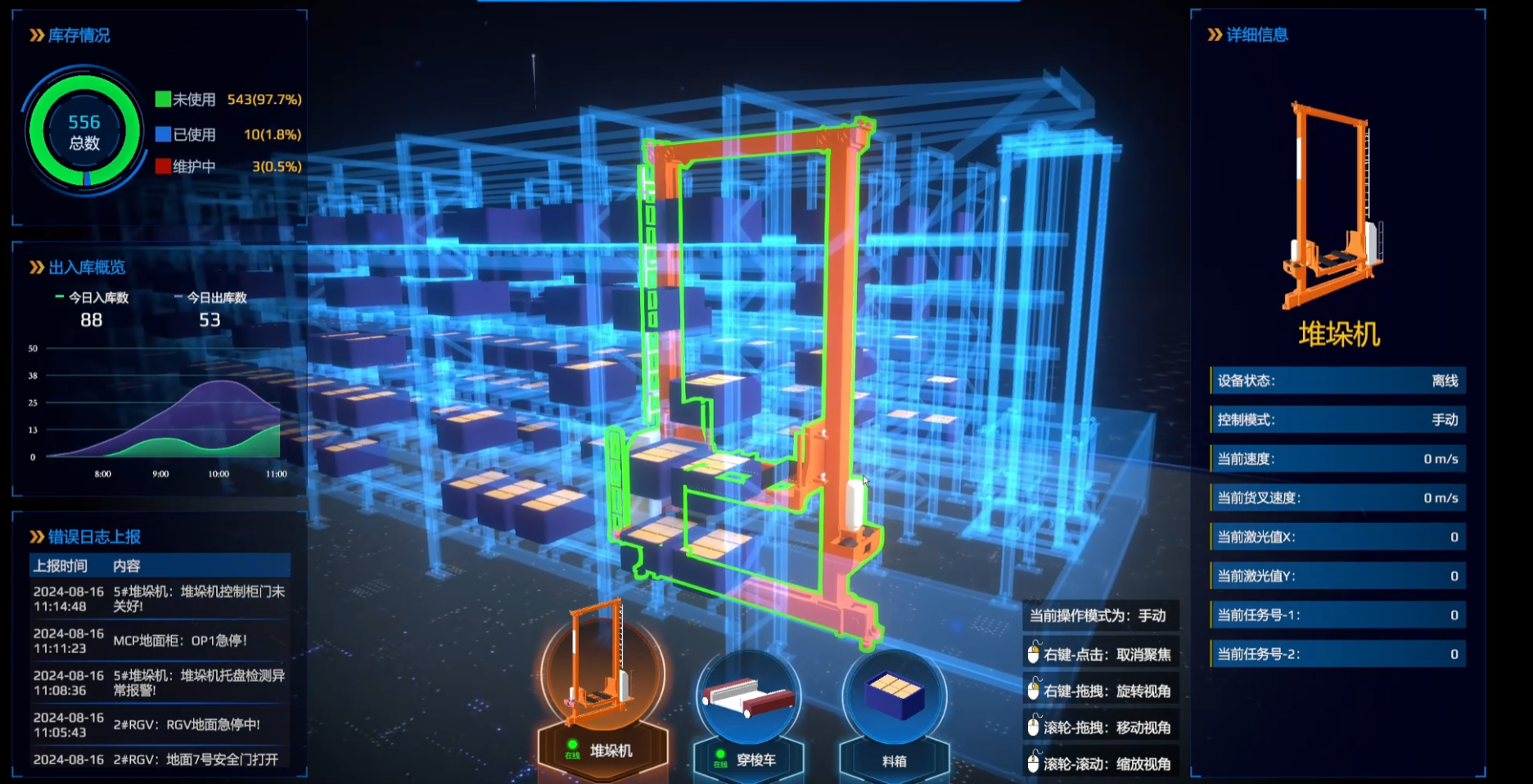
Currently, automated warehouses have been widely applied in various fields such as manufacturing, e-commerce logistics, new energy, and pharmaceuticals, becoming a crucial component of modern intelligent logistics systems. They not only address the issue of insufficient storage space for enterprises but also drive the transformation of warehousing models from traditional management to intelligent operations.
In the future, as land resource costs rise and intelligent manufacturing continues to advance, automated warehouses will become a crucial infrastructure for enterprises to enhance space utilization, reduce operational costs, and strengthen supply chain competitiveness, providing robust support for the digital transformation of the warehousing and logistics industry.