In today’s rapidly evolving digital economy, where demands for supply chain efficiency continue to rise, the shortcomings of traditional warehousing models—such as low space utilization, high labor costs, and inefficient operations—are becoming increasingly apparent. As the cornerstone of digital transformation in the logistics industry, smart warehouses are leveraging technological innovation to break through industry bottlenecks. They are driving the warehousing and logistics sector toward upgrades characterized by high efficiency, precision, and intelligence, thereby becoming a key driver for enterprises to enhance their core competitiveness.
Smart warehouses integrate cutting-edge technologies such as the Internet of Things (IoT), artificial intelligence (AI), big data, and digital twins to achieve a new warehousing model featuring intelligent control across the entire process of goods storage, picking, handling, and management. Its core value lies in leveraging technology to break down data silos across all warehousing processes, thereby optimizing resource allocation and operational efficiency. This effectively transforms the outdated traditional model of “people finding goods and manual management” into an operational paradigm of “goods-to-person and system-driven management.”
Currently, the application of smart warehouse technology is diversifying across multiple core areas, including automated storage, intelligent picking, and data-driven management. In the storage phase, intelligent multi-tier shelving systems, paired with stacker cranes, AGVs (Automated Guided Vehicles), and other equipment, fully utilize vertical space to increase warehouse space utilization to over 85%. Compared to traditional flat-layout warehouses, storage capacity is doubled, effectively resolving the challenge of limited warehouse space for businesses. This solution is particularly suitable for industries with a high number of SKUs and high turnover rates, such as e-commerce and fast-moving consumer goods (FMCG). In the picking process, strategies such as order consolidation and wave picking, combined with technologies like RF handheld terminals and automated picking systems, significantly reduce unnecessary movement by pickers. This boosts per-person picking efficiency from 70–120 items per hour to over 250 items, while simultaneously raising picking accuracy to over 99.9%. This minimizes the risk of mispicks and omissions, thereby reducing business losses.
The integration of artificial intelligence and big data technologies has enabled smart warehouses to achieve an intelligent upgrade characterized by “proactive thinking.” By analyzing historical sales data and order information through machine learning algorithms, smart warehouses can accurately predict inventory demand, complete replenishment planning in advance, and avoid issues such as inventory backlogs or stockouts. Path optimization algorithms can plan and optimize routes for picking robots and AGVs, reducing equipment idle time and further improving operational efficiency. Digital twin technology creates a virtual replica of the warehouse, enabling real-time monitoring, simulation optimization, and predictive maintenance across the entire warehousing process. This helps managers quickly identify operational pain points, optimize management strategies, and reduce operational costs.
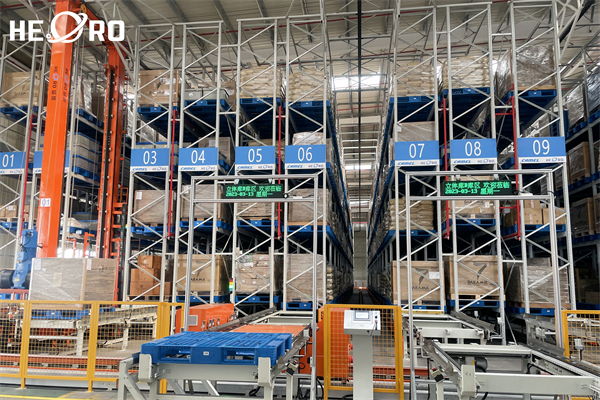
With the advancement of the national “AI + Digital and Intelligent Supply Chain” special action plan, the application scenarios for smart warehouses are continuously expanding. From raw material storage and finished goods turnover in manufacturing to order fulfillment in e-commerce and sorting and delivery in the express delivery industry, smart warehouses have become a crucial pillar for the digital transformation of supply chains across various sectors. An increasing number of enterprises are beginning to invest in smart warehouse construction, leveraging WMS (Warehouse Management Systems), automated equipment, and intelligent algorithms to reduce costs and improve efficiency in warehousing operations while enhancing market responsiveness.
From an industry trend perspective, smart warehouses are moving toward greater autonomy and collaboration. The application of cutting-edge technologies such as embodied intelligent robots and large AI models will enable smart warehouses to achieve autonomous perception, decision-making, and execution, further reducing the need for human intervention. Meanwhile, smart collaboration across warehouses and regions will break down silos in warehousing, facilitate coordination across all supply chain links, and propel the logistics industry into a new phase of high-quality development.
For enterprises, investing in smart warehouse development is not only an inevitable choice to address market competition but also a crucial path to achieving sustainable development. Through the construction of smart warehouses, enterprises can reduce labor costs, improve operational efficiency, and optimize inventory structures, thereby upgrading warehouse management to be more digital and refined. This, in turn, enhances the overall responsiveness of the supply chain, granting enterprises a competitive edge in the fiercely competitive market. Driven by technological innovation, smart warehouses will continue to empower transformation in the logistics industry and inject new momentum into the high-quality development of the digital economy.