Industry News
The “Intelligent Hub” of Smart Factories: Information Systems.
Within smart factories, information systems serve as the “intelligent hub,” overseeing every aspect of production. Take the Manufacturing Execution System (MES) as an example: it enables real-time monitoring of production line operations—including equipment status, production progress, and quality data—while also facilitating functions such as production planning, task allocation and scheduling, and production data collection and analysis. Upon detecting anomalies—such as excessive temperatures, low pressure, or equipment failures—the MES system immediately triggers alerts and proposes solutions, preventing production incidents and ensuring process safety and stability. Simultaneously, through in-depth analysis of production data, enterprises can optimize workflows, enhance efficiency, and reduce costs.
Enterprise Resource Planning (ERP) systems are another vital component of smart factory information systems. They connect core business functions including procurement, inventory, production, sales, and financial management, enabling multi-factory and multi-department collaboration, cost accounting, profit analysis, and business-finance integration with multi-currency settlement. Through ERP systems, enterprises achieve optimized resource allocation, enhanced operational efficiency, and strengthened market competitiveness.
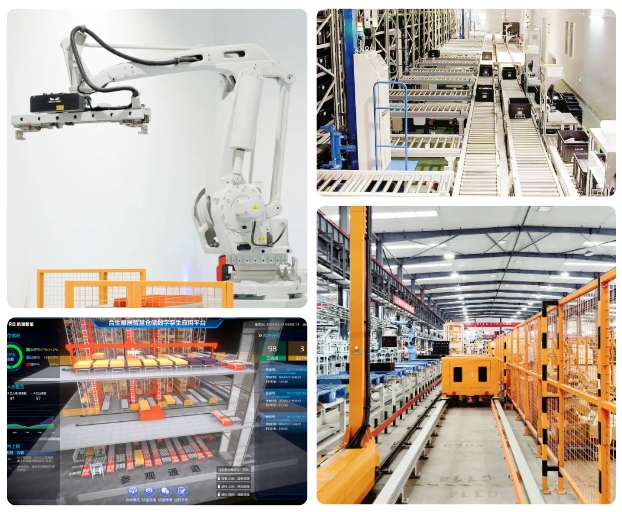
Information systems also enable precise production scheduling, a critical factor in boosting efficiency. By collecting and analyzing real-time production data while considering factors like equipment capacity, workforce availability, and material supply, these systems employ advanced algorithmic models to generate optimized production plans. During actual production, the system rationally assigns tasks based on order urgency, product lifecycles, and equipment availability, ensuring high line efficiency.
In quality control, information systems play an equally vital role. Quality Management Systems (QMS) collect real-time quality data throughout production—including raw material inspection results, critical process parameters, and finished product inspection data—and employ data analytics and Statistical Process Control (SPC) techniques for continuous monitoring and analysis. Upon detecting quality anomalies, the system immediately triggers alerts and provides corresponding improvement recommendations. Furthermore, the information system enables traceability of quality issues. Through comprehensive recording and management of production data, enterprises can swiftly and accurately trace the root cause of quality problems—including information on raw material suppliers, production equipment, operators, and production timelines—thereby implementing targeted corrective measures to prevent recurrence.