Against an industry backdrop of tight land resources and rising labor costs, traditional horizontal storage models struggle to meet enterprises' scaling demands. Smart automated storage and retrieval systems (AS/RS), with their high space utilization, operational efficiency, and robust management capabilities, have emerged as a pivotal choice for the intelligent transformation of the warehousing and logistics sector, progressively reshaping modern warehouse operations.
Operating on the principle of “maximizing vertical space and optimizing internal efficiency,” smart automated warehouses integrate high-rise shelving systems, automated storage and retrieval equipment, and intelligent management systems. This synergy overcomes the spatial constraints and labor dependency inherent in conventional warehousing. Compared to conventional flat warehouses, intelligent vertical warehouses feature shelving heights ranging from 10 to 40 meters, achieving 3 to 5 times the storage capacity per unit area. This significantly enhances space utilization and effectively alleviates the challenge of limited warehouse land availability for enterprises.
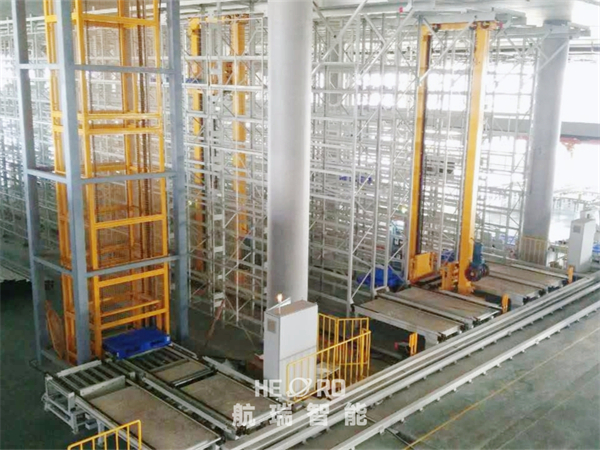
Leveraging the synergy between Warehouse Management Systems (WMS) and Warehouse Control Systems (WCS), these automated warehouses achieve full-process automation for receiving, shelving, picking, shipping, and inventory counting. A single stacker crane can pick items 3-5 times faster than traditional methods, with operational error rates controlled below one in ten thousand, substantially reducing human error and operational costs.
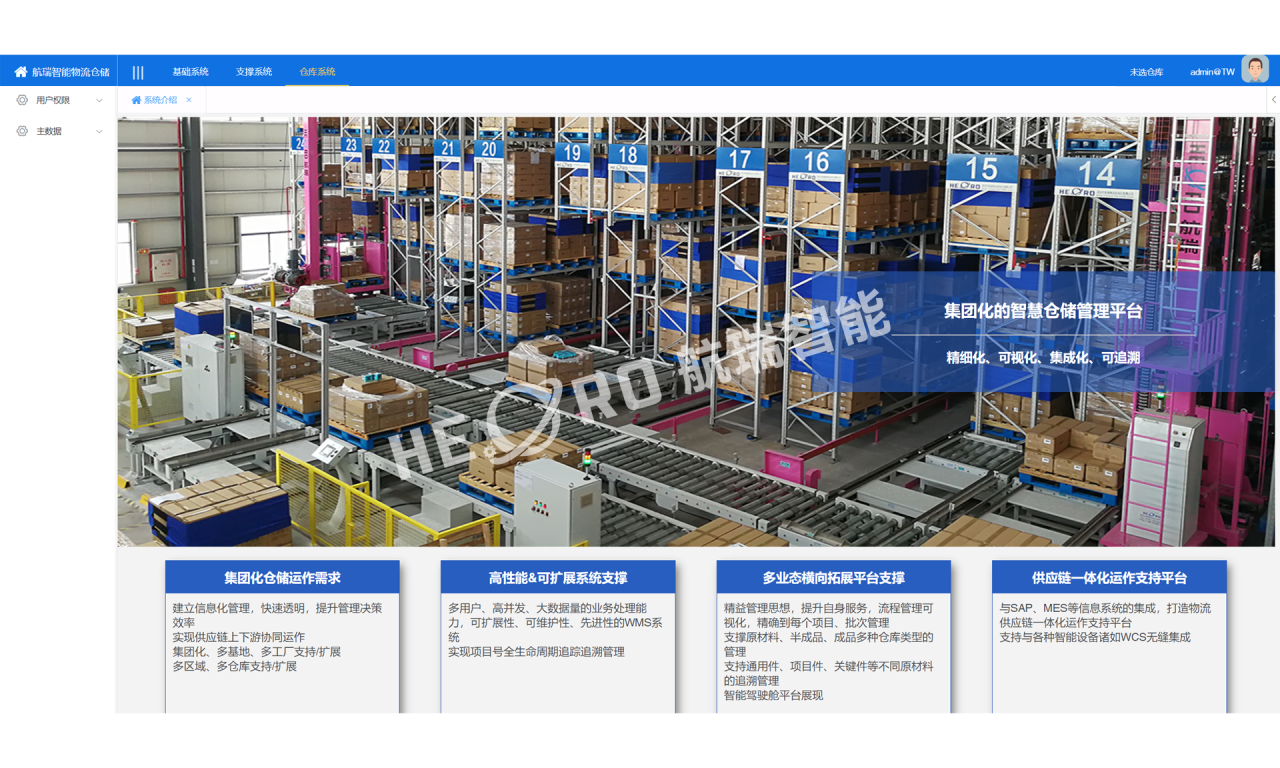
Currently, intelligent automated warehouses are widely deployed across e-commerce, pharmaceuticals, automotive manufacturing, cold chain logistics, and other sectors, adapting to diverse industry storage requirements. E-commerce leverages these systems to handle high-frequency inbound/outbound demands during peak sales periods. The pharmaceutical industry utilizes them for batch traceability and temperature-controlled storage. Manufacturing enterprises rely on them to integrate warehouse operations with production lines, enhancing supply chain efficiency.
With continuous advancements in IoT and AI technologies, the flexibility and scalability of intelligent automated warehouses are constantly improving. They can be flexibly expanded to accommodate business growth and adapt to the storage needs of diverse product categories. In the future, intelligent automated warehouses will continue to drive the transformation of the warehousing industry from labor-intensive to technology-intensive operations. They will provide robust support for enterprises to reduce costs, increase efficiency, and enhance core competitiveness, thereby contributing to the high-quality development of the warehousing and logistics sector.