Industry News

Home  / News Center  / Industry News
News Center 2026.03.05

Understanding Smart Warehouses in One Article: Technology-Empowered Storage Upgrades Unlock New Supply Chain Efficiency.

Amid the wave of industrial digital transformation, smart warehouses have evolved from an “optional upgrade” to an essential component for businesses seeking to enhance their overall competitiveness. Unlike traditional warehouses reliant on manual labor, smart warehouses leverage technology as their core driver. They integrate diverse hardware and software systems to build a fully intelligent management framework, serving as a pivotal hub connecting production and distribution. This enables industries across the board to achieve cost reduction, efficiency gains, and quality improvements in their warehousing operations.

The core competitiveness of smart warehouses stems from the integration and synergistic application of multiple technologies. Their core components comprise three major segments: First, automated handling equipment—AGV transport robots, automated sorters, and automated storage and retrieval systems (AS/RS)—replace manual labor in performing heavy lifting, sorting, and storage tasks, reducing human error. Second, intelligent management systems—Warehouse Management Systems (WMS) and IoT sensors—collect real-time inventory and operational data, enabling precise inventory control and visualizing workflow processes. Third, intelligent algorithm support optimizes storage allocation and order picking routes through big data analysis, making warehouse operations more scientific and efficient.
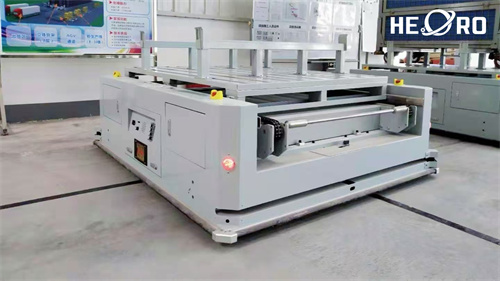
智能仓库-航瑞智能


Compared to traditional warehouses, smart warehouses offer particularly prominent advantages, which are also the core reasons for their rapid adoption. In terms of efficiency, smart warehouses enable 24/7 uninterrupted operations, boosting picking and outbound efficiency by over 50% compared to traditional models, significantly shortening order delivery cycles. Regarding costs, automated operations reduce reliance on manual labor, lowering labor management and error costs. Simultaneously, multi-level storage significantly improves warehouse space utilization, reducing site investment. In management, end-to-end digital control streamlines inventory audits and goods traceability, achieving over 99.9% inventory accuracy while effectively preventing stockpiling and goods deterioration.
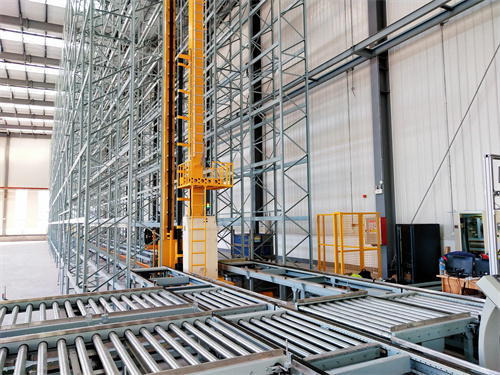
智能仓库-航瑞智能


Currently, smart warehouses have penetrated multiple mainstream industries, with scenario-based solutions maturing rapidly. In e-commerce, smart warehouses support rapid processing of massive orders during peak sales periods, enabling “same-day” and “next-day” delivery commitments. In pharmaceuticals, they ensure drug storage safety through constant temperature and humidity control alongside precise traceability. In manufacturing, seamless integration with production lines facilitates intelligent flow of raw materials, semi-finished goods, and finished products, boosting production coordination efficiency.

With continuous technological iteration, smart warehouses are evolving toward greater flexibility, intelligence, and sustainability. In the future, integrated with emerging technologies like 5G and digital twins, these facilities will achieve fully automated operations across all processes. This will further dismantle information barriers within supply chains, positioning smart warehouses as a critical pillar for industrial digital transformation and injecting new momentum into enterprises' high-quality development.
Go to top